Excellence lies in execution
Essay on experience, critical thinking and learning.
Where is Excellence?
It is not in discourse.
It is not in the result.
Excellence lies in execution.
There is a very common confusion when we talk about excellence. Many people believe it appears in discourse. Others believe it appears in the result. But excellence is in neither.
We live in a time when ideas appear all the time. Ideas emerge in meetings, in well-prepared presentations, in short videos on social media. There is always someone explaining how something should be done.
Discourse rarely lacks. But discourse does not require confrontation with reality. It can exist only on the level of ideas. And ideas, however good they may be, are not always tested in practice and do not guarantee results.
The curious thing is that the result can also be deceptive. A result can be impressive. It can generate recognition, financial resources or visibility. The result can be chance, it can be luck, it can even be the fruit of good work. Result is result. A victory of 1-0 is still a victory; it makes no difference whether the goal was a bicycle kick or with the belly.
But the focus here is where excellence lies. And the result alone does not necessarily reveal excellence. It only reveals that something happened.
Between discourse and result there is a territory that rarely appears. That territory is called execution. It is there that ideas meet the real world. It is there that limitations, errors, adjustments and decisions arise.
Execution demands something discourse does not: thinking in contact with reality.
While an idea remains only in discourse, it has not yet produced any experience. Experience arises when someone begins to act. It is in action that unforeseen situations appear. It is in action that we discover we may be wrong. It is in action that real challenges emerge.
And it is precisely this experience of doing that gradually produces the result.
The result therefore does not arise directly from the idea. It arises from the experience built during execution. That is why excellence is neither in discourse nor in the result. It lies in the process that generates experience.
It lies in execution.
The experience of Simone Weil
In the 1930s the philosopher Simone Weil made a curious decision. She wrote about labor and the condition of workers in industrial society. But she realized something that bothered her: many intellectuals discussed factory work without ever having lived that experience.
So she decided to do something unusual. She temporarily left her teaching career and went to work as a factory worker. Not as an observer, but as an ordinary worker on the production line.
She believed that certain realities cannot be understood only through reflection. They need to be lived.
A simple logic helps explain this: who could speak better about the working-class life of that time? Thinkers writing about it from their libraries without ever experiencing factory reality? Or a thinker living the daily work of the production line?
That was precisely the logic that led Simone Weil to the factory. The same logic also led her to war, but that is another story.
By deciding to work as a factory worker, she exchanged theoretical distance for direct experience. And that experience changed how she understood what she wrote about.
Because the experience of doing reveals things that isolated theory cannot show.
There is something profoundly true in this attitude. Execution forces thought out of the comfort of ideas. It requires adaptation, observation and decision. It demands critical thinking.
And that is precisely where experience becomes important. Because experience is not merely living something. We can live something without reflecting on it. Experience is what happens when action and reflection meet.
The illusion of the technological shortcut
Today, we are living in a moment that seemed impossible just a few years ago. With the advancement of artificial intelligence, many technical tasks have become faster and more accessible. Writing texts, generating images, programming tools, or organizing information are processes that now take only a matter of minutes.
In a sense executing certain tasks technically seems easier than ever. But that does not mean execution has become simpler.
Execution is not merely producing something. Executing means going further. It requires thinking, thinking about how to do, thinking while doing. It means making decisions when situations were not part of the original plan. It means adjusting the path when reality does not match the idea.
Perhaps that is why something curious can be observed today: sophisticated discourse, impressive results, and yet little excellence.
Because excellence does not depend only on technical intelligence, academic degrees or financial success. Excellence depends on the ability to cross the process that connects an idea to the real world. That process demands something rare: critical thinking.
And here appears a problem that goes beyond the professional field. It directly touches how we learn.
The iron cage and education
The sociologist Max Weber described something similar when analyzing modern structures of society. He used the metaphor of the iron cage to explain how highly rationalized systems can imprison individuals within predictable bureaucratic routines.
This phenomenon also appears in education. When learning focuses only on content and measurable outcomes, something important is lost.
The space for experience is lost.
The space for reflection is lost.
And without experience and reflection, critical thinking hardly develops.
That is why experience has become so important in contemporary education. Experiences put thinking into motion. They create situations in which someone must decide, interpret and adjust paths.
They bring closer what is often separated: theory, action and reflection.
Most current educational systems were organized to transmit content and measure results. Grades. Exams. Indicators.
But rarely are these systems organized to develop what execution requires: experimentation, reflection, adjustment and critical thinking.
When this happens, the space for reflection diminishes. Rules begin to guide actions, not necessarily thought.
And it is precisely in this territory that important questions arise.
If critical thinking and real knowledge arise from experience, then teaching cannot be merely the transmission of content. It must create experiences that provoke reflection. Experience, when accompanied by reflection, becomes learning. Excellence emerges along the path between the two.
In my case, as I learn to work with education, some questions appear frequently:
How can knowledge be transformed into something that can be lived?
How can experiences be designed that make someone think, explore and learn?
These questions are not new. Many answers already exist. Educational pragmatism follows this logic. The difference here is that I am trying to answer them within the experience I am gaining through execution.
This logic led me to affirm that excellence is not in discourse. Nor is it in the result.
Excellence lies in execution.
Projects and Execution
And this principle is not only a reflection. It also appears in the logic of the projects presented on this site.
-
Radio Hunter
The player lives the experience of investigating a mystery. They collect clues, interpret information and make decisions to advance the story. Learning emerges from the actions, choices and discoveries made by the player throughout the proposed challenges and interactions.
-
Puller
The student experiences the use of applied radioprotection resources. They consult data, perform calculations and use information to solve real situations in their field. Learning arises from the practical use of these tools.
-
Scientific research micro-experience
Teachers in training experience making decisions about the use of technology in simulated educational situations. They choose strategies, analyze consequences and later reflect on those choices.
-
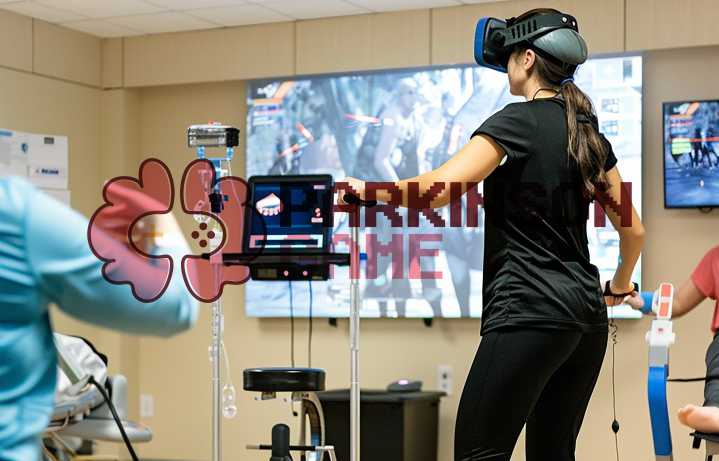
Therapeutic game for Parkinson
The patient experiences performing movements and interacting with cognitive stimuli within a playful activity. Improvement happens during the practice of the activity, not only through explanation of the exercise.
These projects have brought me new questions that will lead me to other projects.
Execution.